7 Pool Resurfacing Options: Looks, Upkeep, and Fit
Compare 7 pool resurfacing options, from white plaster to tile, with appearance, maintenance needs, lifespan, and which pool each suits best.
The cover comes off in May, the water clears, and then you see the walls. Chalky patches near the tile line. A strip of floor that feels like sandpaper under your heel. A rust-colored bloom around a return fitting that wasn't there last September. Nothing is leaking, the pump is fine, and the pool is perfectly swimmable. You just can't look at it without wincing, and now you're standing in the shallow end deciding whether to patch it, replaster it white, or spend up for something you won't have to think about again.
The surface you pick decides more than the water color. It sets how the floor feels on bare feet, how hard you have to chase pH and calcium, how often someone has to brush the walls, and how many years pass before you're standing in the same spot with the same decision.
Seven pool resurfacing options follow, each matched to a situation rather than a price ranking: a sun-baked yard, a quick refresh before a sale, a family pool used barefoot every day, a backyard built for showing off. Every entry closes with a plain verdict on who it fits and who should walk away, and the comparison table after the list puts the numbers side by side.
1. White Cement Plaster (Marcite)
White marcite is white Portland cement blended with marble aggregate or silica sand, troweled over the shell in a thick coat. It cures smooth and bright, bounces light back through the water, and makes a pool look clean even when the chemistry has been sloppy. Every plaster crew in the southern San Joaquin Valley knows it by heart, which keeps labor competitive and scheduling short.
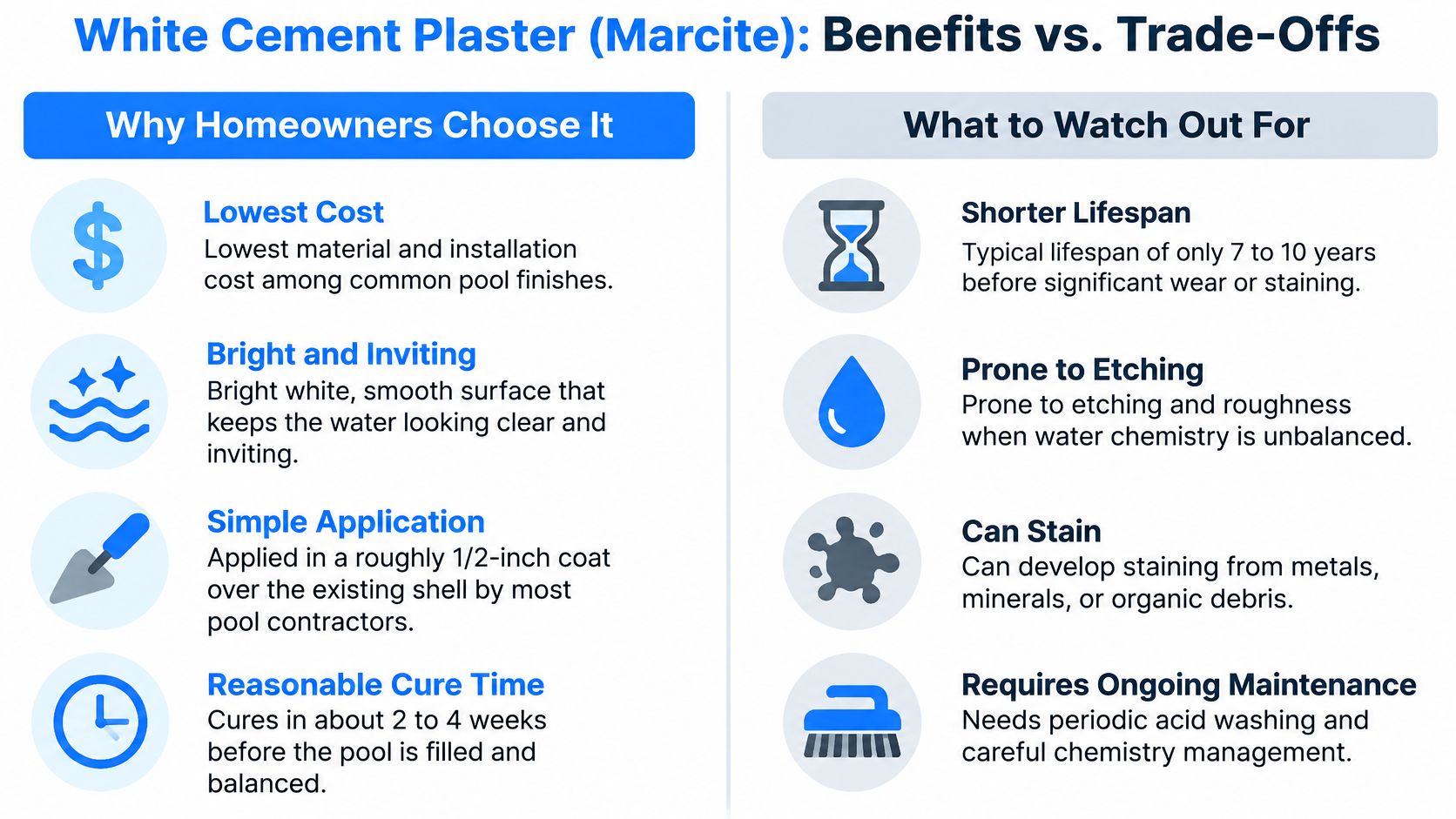
The trade-off chart is short, and it explains why marcite stays the default anyway.
What It Costs and How Long It Lasts
This finish sets the budget floor. A standard 1,000-square-foot resurfacing project typically runs $6,000 to $15,000, with an average near $11,000, according to Unique Companies, and plain white plaster sits at the bottom of that spread. If the shell underneath is sound, that gap buys a clean, bright pool for real money less than any aggregate option.
The lifespan is the honest catch. A municipal replastering assessment treats replastering as routine, scheduled maintenance rather than a failure, and in practice white plaster needs redoing within roughly the first decade, with water chemistry and wear deciding where you land in that window. In Bakersfield, the environment side of that equation means long triple-digit summers, heavy evaporation, and fill water that arrives with calcium already dissolved in it.
What Kills a Plaster Finish Early
- Low pH: Water below roughly 7.2 dissolves the calcium matrix and leaves etched, chalky patches that trap dirt.
- High calcium hardness: Scale bonds to the surface, feels gritty underfoot, and dulls the water.
- Skipped brushing: Fresh plaster releases calcium hydroxide for weeks. Brush twice daily for the first two weeks and keep the pool full so the dust has somewhere to go besides the floor.
- Deferred acid washing: A wash every few years strips mineral buildup, but each one removes a thin layer of plaster. It's a reset, not a cure.
Practical rule: If you won't test and correct chemistry at least twice a week, don't buy a premium finish. Buy the cheapest surface you can live with and put the savings into a service plan.
If the tile line and coping need attention at the same time, a free consultation and estimate from Bakersfield Pool Build prices the plaster job alongside updates like tile, coping, water features, and lighting before you commit.
Choose this if you're selling within a couple of years, the budget is tight, or you enjoy the weekly chemistry ritual. Skip this if the pool is the backyard's centerpiece, the yard bakes in afternoon sun, or you already know the test kit will stay in the cabinet.
2. Quartz Aggregate Plaster
Quartz is the finish I'd recommend for most Bakersfield pools when the budget allows exactly one step up. It takes the cement binder you already understand and swaps part of the soft marble for crushed quartz crystals, which are harder, denser, and far less willing to stain.
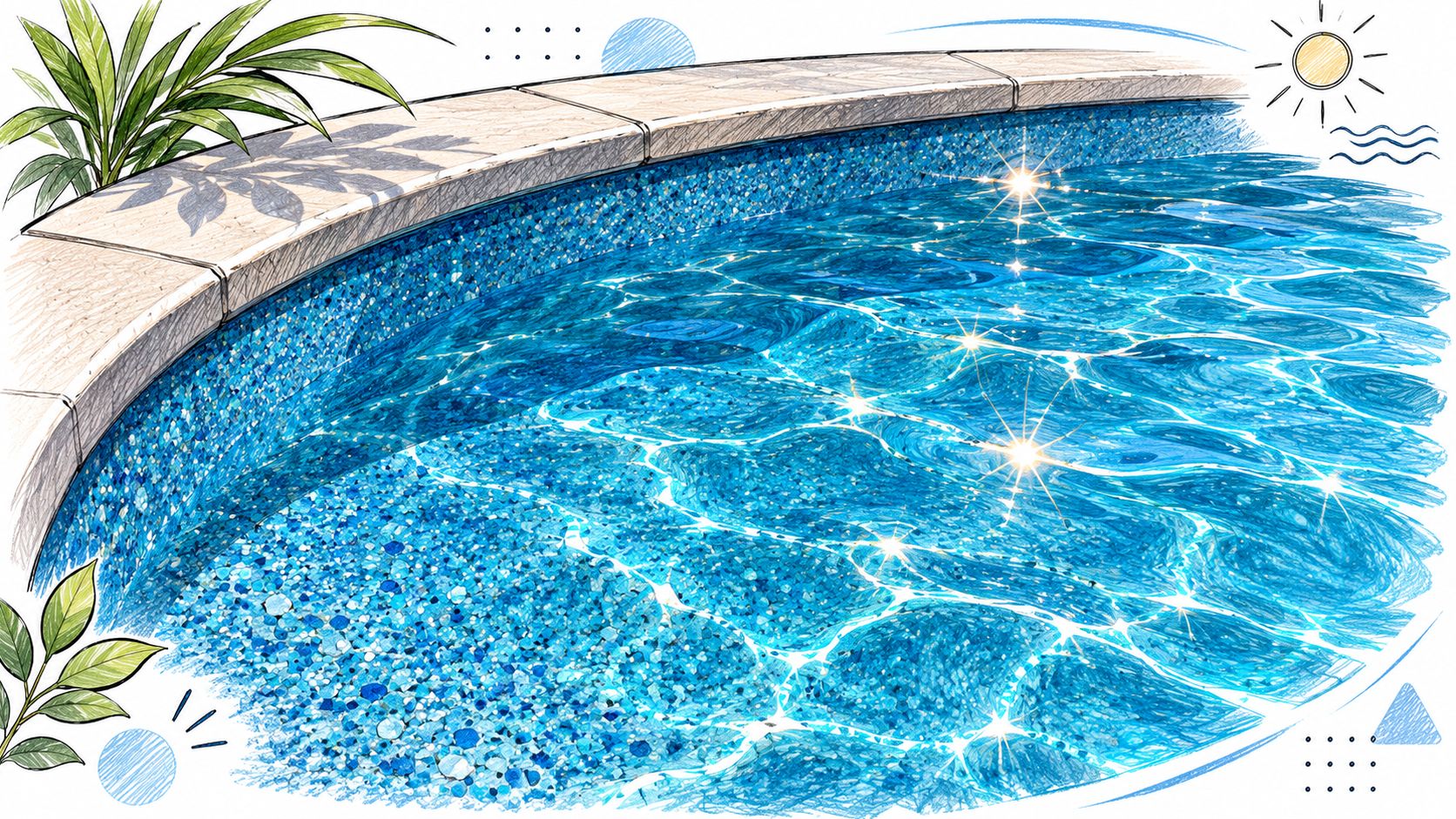
A mid-tone quartz blend shifts water color more than most homeowners expect, which is why the sample review matters so much.
The Middle Ground That Actually Performs
The gain isn't cosmetic. A pool resurfacing contractor's material guide puts traditional white marcite at about 7 to 12 years of service under controlled water chemistry, with quartz aggregate at roughly 12 to 15 years because the quartz resists abrasion, staining, and localized etching.
That extra hardness cuts both ways in one specific place: pH. Aggressive low-pH water still dissolves the calcium-based matrix around the crystals. You get a surface that looks intact for years while the binder slowly recedes, leaving quartz grains standing proud and rough. Scale-forming water does the opposite, laying down calcium carbonate that bonds hardest to textured finishes.
Picking a Blend That Doesn't Disappoint
- View samples wet, not dry. A color chip on a card is meaningless. Drop it in a bucket of pool water and look at it in direct sun.
- Go lighter in full-sun yards. Darker blends absorb heat and warm the water, which changes chemical demand.
- Ask for the aggregate size and finish thickness in writing. Quartz comes in fine and coarse grinds, and the grit level drives both traction and how much brushing the surface asks for later.
Choose this if you want visible color and a longer replacement interval than plaster without paying pebble money, and you'll commit to consistent water testing. Skip this if you're chasing the absolute lowest bid or you want a natural stone look, because quartz reads uniform and manufactured under water.
3. PebbleTec and Pebble Aggregate Finish
Picture a west-facing pool with no shade after two in the afternoon and four kids in it every day from May to October. That pool doesn't need a prettier surface. It needs a surface that survives a decade of sunscreen, cannonballs, and chemistry that gets tested when someone remembers.
Pebble finishes answer that. PebbleTec is a branded system of polymer-modified cement with natural river pebbles embedded through the surface, exposing stone rather than a smooth troweled skin. The stone does the wearing instead of a thin cream layer.
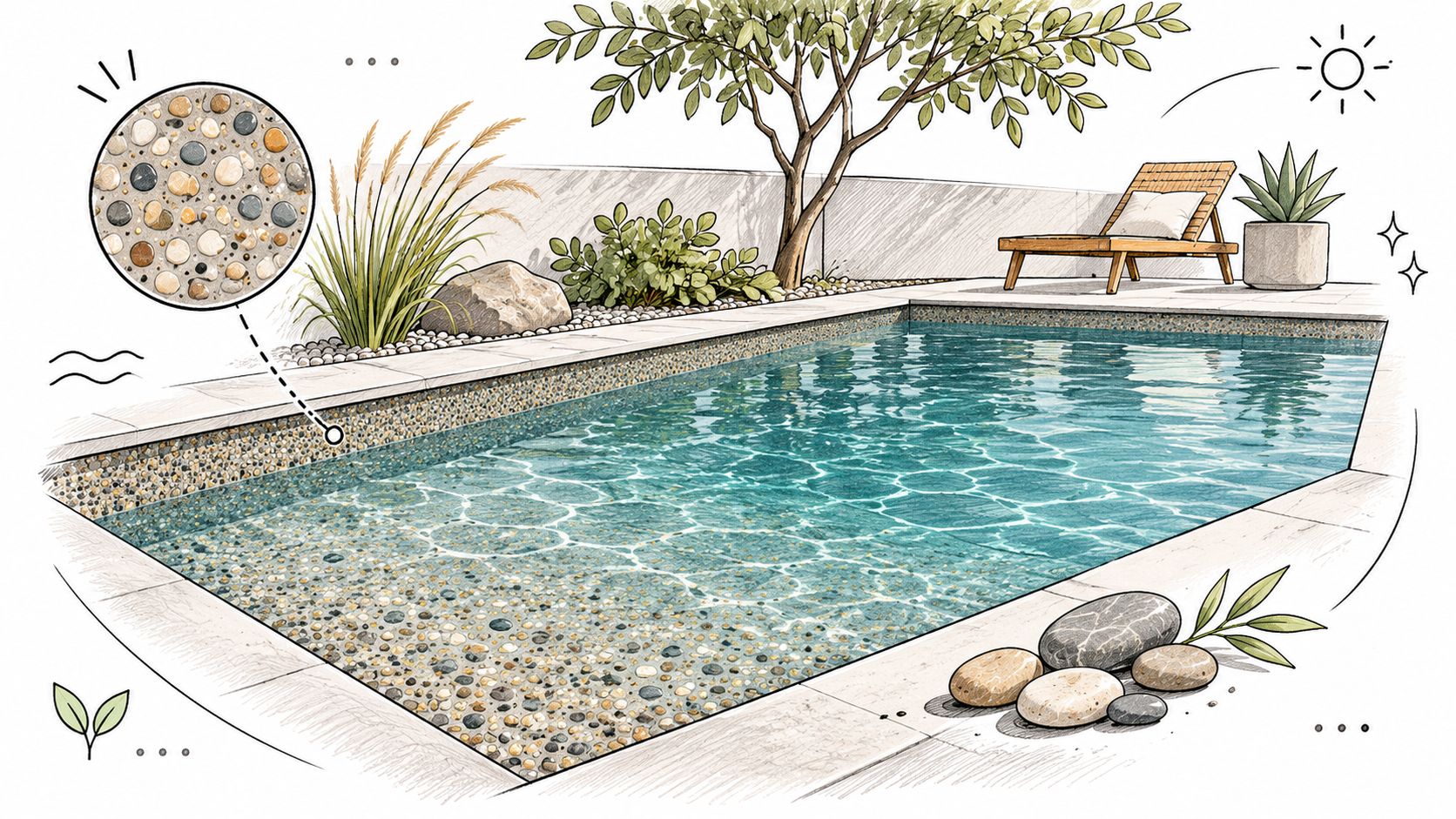
Pebble also reads darker and greener in the water than it does on a dry sample board, so insist on seeing wet samples under your own sky.
The Numbers Behind the Upgrade
The city of Ventura's aquatic center re-plastering report is a useful case because it compares both worlds. Plaster installed in 2004 carried an expected life of approximately 10 years. When the pools came due, a pebble-finish system was specified with an expected service life of 15 to 18 years, which works out to roughly a 50% to 80% durability increase over the earlier plaster cycle. The project's approved construction budget was $373,606.26, so the durability conversation had real money behind it.
Texture Is the Real Trade-Off
Pebble gives you traction on steps and a floor that hides imperfections. It also gives you grit underfoot, and that grit wears on robot cleaners faster than a smooth finish. Ask about smaller aggregate blends if you want the durability without the pumice-stone feel.
Salt systems deserve a harder look than most buyers give them. A resurfacing options analysis notes that typical salt-chlorinator concentrations of roughly 3,000 to 4,000 ppm may accelerate erosion of calcium-carbonate plaster, while quartz and glass aggregate resist salt exposure better, and that a nominally 20-year finish can fail in about eight years when water stays chronically unbalanced.
Choose this if the pool is a long-term keeper, the yard has no shade, and you want the longest interval before you do this again. Skip this if barefoot comfort outweighs longevity for you, or you're unwilling to brush a textured floor regularly.
4. Glass Tile and Mosaic Waterline Finish
Glass tile is the option that makes people stop mid-sentence. It's non-porous, it doesn't fade or stain, it shrugs off chlorine, and light moving across a glass mosaic at dusk does something no plaster can imitate. It's also the finish most likely to be installed badly, because the setting bed and grout work are unforgiving.
A full glass mosaic installation looks like this when the layout and setting are done properly.
Where It Belongs and Where It Doesn't
A waterline band is the smart play for most budgets. It hides the scum line, frames the water, and gives you the shimmer without tiling the entire shell. Full-interior glass is a premium decision with a premium labor bill.
Tile resurfacing or replacement runs approximately $20 to $30 or more per square foot and can last at least 25 years, according to Classic Marcite. That per-foot price is the reason tile usually appears as a band, a spa interior, or an accent wall rather than wall-to-wall.
The Details That Decide Whether It Lasts
- Submerged-rated adhesive and grout only. Standard thin-set fails below the waterline. Use products labeled for continuous immersion.
- Textured or matte glass on steps and entries. Polished glass gets slick when wet, and a pool step is exactly where that matters.
- Layout before installation. Center the pattern on the waterline, line it up with skimmer throats and return fittings, and check the corners before the first tile goes up.
- Grout is the weak point, not the glass. Clean it regularly and keep pH in range, because acidic water eats grout long before it touches the tile.
Choose this if you're building a showpiece backyard, you want a salt-tolerant surface, and the budget covers skilled labor. Skip this if you're stretching every dollar or you expect to hand the pool to a tenant who won't maintain it.
5. Natural Stone Tile (Travertine and Other Stone)
Stone is a design decision first and a pool decision second. Travertine, limestone, and slate bring a warm, quarried look that pairs with stucco walls, olive trees, and Mediterranean landscaping in a way that manufactured tile can't. The catch is that stone is porous, and a pool is the wettest place on your property.
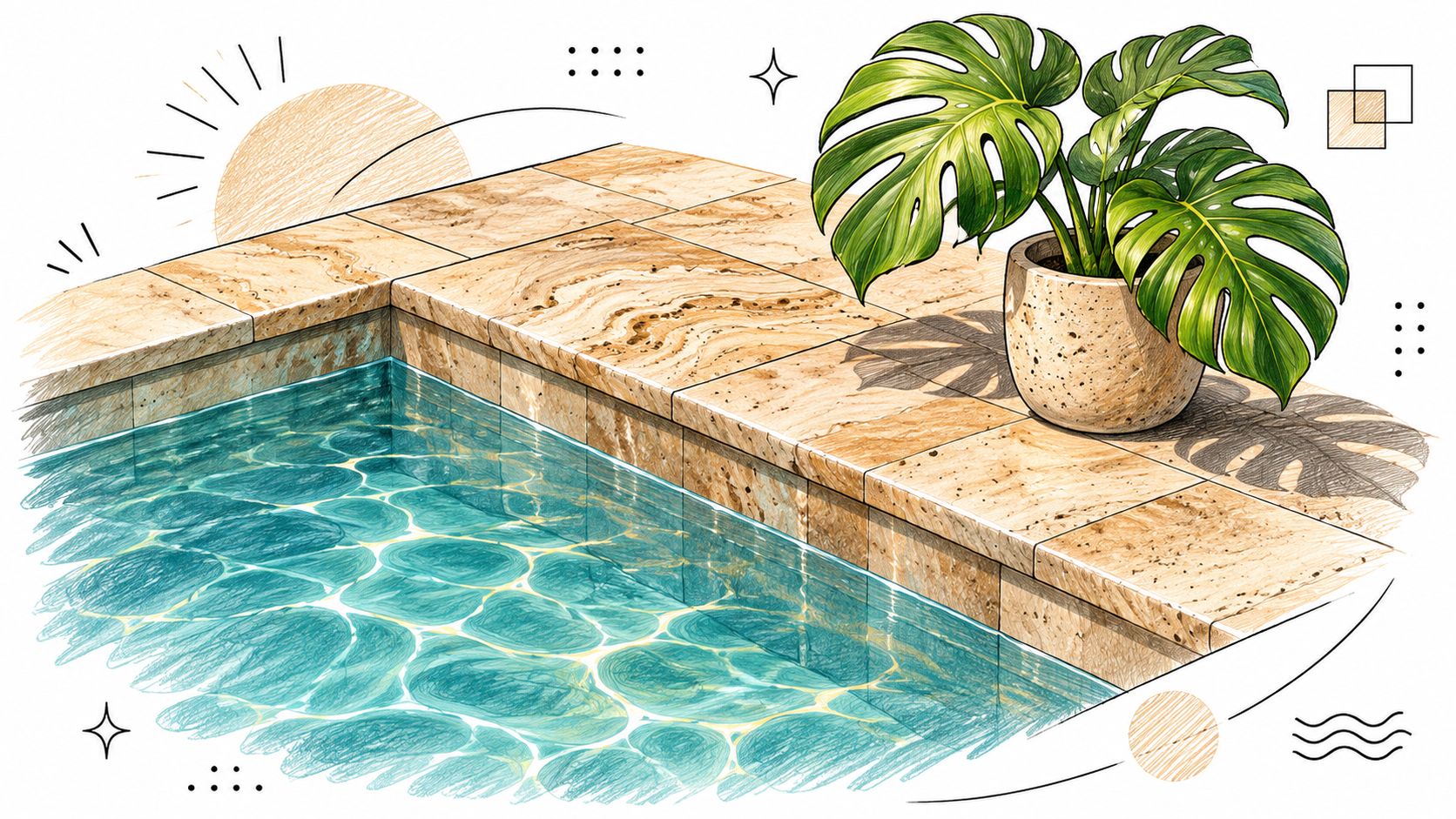
Stone coping and decking carry the same palette from the water's edge out to the patio, which is why the look holds together so well.
Heat, Slip, and Sealing
Light-colored, honed, or tumbled stone stays cooler underfoot than a dark polished slab, and that matters when the deck is in full sun through August. Brushed or tumbled finishes also give you grip on coping where polished stone turns dangerous when wet.
Sealing is not optional. Stone takes up water, and unsealed travertine around a pool will stain from sunscreen, leaves, and mineral deposits. Reapply a pool-safe penetrating sealer on the manufacturer's schedule, and never use an acidic cleaner on stone.
What to Confirm Before Stone Goes Below the Waterline
Not every stone is rated for continuous submersion, and the ones that aren't will spall, flake, and shed grit into the pool. Ask for the supplier's written confirmation that the specific stone is suitable for submerged use, and get the sealer specification in the same document. Pair stone decking with a smoother interior finish if kids spend hours in the shallow end.
Stone that looks beautiful dry can turn into a maintenance project once it's wet every day. Approve the stone and the sealer together, not separately.
Choose this if the backyard design is the point, you're already sealing a stone deck, and you'll keep up with it. Skip this if you want a low-chore pool, your deck gets pounded by barefoot traffic, or nobody in the house wants to reseal anything.
6. Vinyl Liner Replacement
A vinyl liner works nothing like the finishes above. Instead of troweling a cementitious coating onto concrete, you fit a flexible sheet over the existing walls and floor. For a pool that already has a liner track, it is usually the least expensive refresh available, and it is the fastest way to change how the water looks.
Speed is the main advantage. No curing window, no plaster dust, no month-long startup chemistry ritual. The pool fills and becomes swimmable almost immediately, which is why liner replacement is the go-to move when you are listing the house or hosting in three weeks.
The Prep Nobody Wants to Pay For
A liner is a skin, not a repair. Any crack, ridge, or rough spot in the wall behind it telegraphs straight through the vinyl and becomes a wear point within a season or two. Smooth the shell first, then verify floor fittings and gaskets before the new liner goes in.
Choose a UV-resistant liner pattern, and in a sun-baked Bakersfield yard, favor lighter colors that show fading and bleaching less. Keep pH and alkalinity in range. Unbalanced water attacks the liner and the seams before it attacks anything else, and a bleached, brittle seam is the first thing a buyer's inspector photographs.
Why Cheap Coatings Cost More
If someone quotes you a paint or epoxy coating as a budget alternative, compare lifecycle rather than installation price. A technical reference on pool plaster repair cites service-life ranges of about 2 to 3 years for acrylic coatings and 7 to 10 years for epoxy, and both demand careful surface preparation to bond at all. A coating that fails early means paying for prep and labor twice.
Choose this if you need a fast, affordable visual reset before a sale, the shell is structurally sound, and you are comfortable with a finite lifespan. Skip this if you want a hard, permanent surface, the walls have movement or cracks, or you are chasing the longest possible interval between projects.
7. Ceramic and Porcelain Tile Waterline and Pool Finish
Porcelain is the quiet overachiever of pool surfaces. It's fired at high temperature, so it's dense, non-porous, and immune to chlorine, and it holds color when plaster finishes have long since gone chalky. Ceramic behaves similarly at a lower price point, with a softer body and less frost and moisture resistance.
Modern porcelain can mimic limestone, concrete, or timber convincingly, which makes it the go-to for clean, contemporary designs where a uniform surface matters more than sparkle.
Grout Is Where the Maintenance Lives
The tile itself will outlast your mortgage. The grout between it won't unless you look after it. Mold, staining, and efflorescence all start in the joints, and a hazy grout line ruins a crisp tile layout faster than anything else.
Plan the layout around the hardware. Center patterns on the waterline, align courses with skimmer throats and return fittings, and check how the tile terminates at light niches before installation. Misaligned tile around a fitting is visible from across the yard, every single day.
Texture and Traction Choices
- Slip-resistant texture on steps, benches, and the shallow end where feet spend the most time.
- Matte or satin finishes below the waterline if glare bothers swimmers.
- Pool-rated adhesive and grout for every submerged installation, no substitutions.
- A spare box of tile stored in the garage. Dye lots change, and a repair years later won't match otherwise.
Inspect for loose or hollow-sounding tiles during routine service. A single drummy tile lets water behind the field, and that's a repair you want to catch small.
Choose this if you want a durable, low-absorption surface with a precise modern look and you'll keep grout clean. Skip this if you're on the tightest budget, you're not ready for grout upkeep, or the shell has unresolved movement.
How the Seven Pool Resurfacing Options Compare on Lifespan, Cost, Upkeep, and Best Fit
Every finish trades something: upfront cost against service life, smooth texture against brushing time, shine against grout upkeep. Set side by side, the differences become practical ones.
| Item | Typical Lifespan | Relative Cost | Maintenance Needs | Best For |
|---|---|---|---|---|
| White Cement Plaster (Marcite) | About 7–12 years | Lowest among common finishes | Careful water chemistry; periodic acid washing | Classic look on a modest budget |
| Quartz Aggregate Plaster | About 12–15 years | Higher than white plaster | Regular chemistry management and brushing; periodic acid washing | More color and durability at a mid-range price |
| PebbleTec Pebble Aggregate Finish | About 15–18 years | Higher than plaster and quartz | Maintain balanced water chemistry; use a certified installer | A durable, natural-looking premium finish |
| Glass Tile and Mosaic Waterline Finish | Long-lasting with proper installation | High, especially for full coverage | Clean grout lines; occasional grout repairs | Custom color, shimmer, and luxury designs |
| Natural Stone Tile (Travertine and Other Stone) | Durable with proper sealing and care | High | Regular sealing and cleaning; use stone-safe products | A premium, natural look that complements landscaping |
| Vinyl Liner Replacement | Depends on sun exposure and water balance | Lowest-cost option | Maintain balanced chemistry; inspect for damage | A fast, budget-friendly refresh |
| Ceramic and Porcelain Tile Waterline and Pool Finish | Long-lasting when properly installed | Higher than plaster or vinyl | Clean grout lines; check and repair grout or loose tiles | Durable, low-maintenance custom designs |
Match the finish to the situation. Plaster or a liner covers a quick refresh before a sale, quartz or pebble suits an owner who wants to resurface once and stop thinking about it, and glass or stone belongs in a high-visibility yard where the finish is the showpiece. For a pool used barefoot all summer, weigh the smooth surfaces against the extra brushing the textured ones need.
Matching Your Pool Surface to Your Budget and Upkeep Tolerance
Back to that May morning with the rough walls and the rust bloom. The decision comes down to three questions, and none of them is about which sample looked prettiest on the counter.
How much can you spend right now? A budget refresh points toward plaster or a liner. A long-horizon plan points toward quartz, pebble, or tile, where the higher number buys years rather than just appearance.
How much work will you realistically do? Be honest. If testing twice a week and brushing on weekends isn't happening, a premium finish is money spent on a surface you won't protect. Textured finishes need more brushing. Smooth finishes show every stain.
How hot and sunny is the yard? A west-facing Bakersfield pool with no shade is a stress test, and lighter colors, shading, and disciplined water balance all matter more than the brand on the sample board.
Then take the practical step: pick two or three finishes and compare them side by side using wet samples, not dry chips. Ask each installer for the expected lifespan and the recommended maintenance schedule in writing, along with what voids the warranty. Vague verbal promises about durability aren't worth much when the surface fails early.
Bakersfield Pool Build offers a free consultation and estimate that factors in your budget, backyard space, and how you use the pool, and you can call 661-378-0220 to start that conversation. Their renovation work covers tile, coping, and finish updates on existing pools, so the discussion starts with what your shell can support rather than what looks good in a catalog.
A finish is only half the decision, and the crew installing it is the other half. Bakersfield Pool Build handles pool renovation work across Bakersfield and Kern County, from tile and coping replacement to new finishes and lighting, and the team works from the first design conversation through final installation. If you're weighing pool resurfacing options for a pool that's showing its age, request a free consultation and estimate at Bakersfield Pool Build and get a plan built around your yard, your budget, and how much upkeep you're willing to take on.
Authored using Outrank tool